Anthropic IPO: What Traders Need to Know
Thursday 13 August 2026
For decades, the U.S. dollar has been the world’s financial anchor. It has dominated foreign exchange reserves, global trade invoicing, cross-border funding, and safe-haven flows during periods of market stress.
But in 2026, that role is being questioned more openly. De-dollarisation, rising gold reserves, U.S. fiscal concerns, geopolitical tensions, and changing expectations for Federal Reserve policy have all raised doubts about whether the greenback still behaves like the world’s ultimate safe-haven asset.
The answer is nuanced. The dollar is not losing its global role overnight. However, its dominance is becoming more contested, and traders may need to analyse the greenback through both short-term macro drivers and longer-term structural shifts.
The U.S. dollar holds ~58% of global foreign exchange reserves, down from ~71% in 2000.
Central banks bought over 1,000 tonnes of gold in 2024, a third consecutive year above that threshold.
No single currency currently matches the dollar's liquidity, market depth, or network effects.
The dollar's safe-haven role may weaken when the shock originates inside the U.S. itself.
The U.S. Dollar Index (DXY) remains the primary benchmark for tracking broad USD strength.
Traders should monitor Fed policy, Treasury yields, DXY levels, and reserve-diversification trends together.
The U.S. dollar remains the leading currency in global reserves and financial markets. The Federal Reserve notes that the dollar continues to play a preeminent role in international reserves, trade, payments, funding, and investment.
However, dominance does not mean immunity. IMF COFER data track the currency composition of official foreign exchange reserves and show that central banks continue to hold large dollar allocations while gradually diversifying into other currencies and assets.
This gradual decline in reserve share is one reason the de-dollarisation debate has intensified. The dollar is still the system’s core currency, but its monopoly-like status is being questioned more frequently.
De-dollarisation refers to efforts by countries, central banks, and institutions to reduce reliance on the U.S. dollar in reserves, trade settlement, borrowing, or payment systems.
This can include:
holding fewer dollar-denominated reserves;
increasing gold holdings;
settling trade in local currencies;
using alternative payment systems;
reducing exposure to U.S. sanctions or dollar-based financial infrastructure.
The trend has been especially visible among countries seeking greater financial independence from the U.S.-led system. However, de-dollarisation is gradual rather than sudden because the dollar remains deeply embedded in global markets.
The dollar traditionally benefits during crises because investors seek liquidity, safety, and access to U.S. financial markets. However, recent market behaviour has become more complicated.
Some analysts argue that the dollar’s safe-haven premium has weakened during periods when the uncertainty originates in the United States itself, such as trade policy shocks, fiscal concerns, or political volatility. Brookings has argued that rising tariffs and the U.S. retreat from international trade may threaten the dollar’s role as a safe-haven and anchor currency.
S&P Global has also noted that tariff-driven inflation risks and policy uncertainty could challenge the dollar’s traditional role as a reliable store of value during market turbulence.
This does not mean the dollar has stopped acting as a safe haven. Rather, it suggests that the source of the shock matters. If the global economy is under stress, the dollar may still benefit. If the shock is specifically tied to U.S. policy credibility, the reaction may be weaker.
One of the clearest signs of reserve diversification is central bank gold demand.
The World Gold Council reported that central bank gold demand remained strong in 2025, with net purchases continuing despite record-high gold prices.
The 2025 Central Bank Gold Reserves Survey also found that reserve managers continued to view gold as important during periods of geopolitical and economic uncertainty.
Gold does not replace the dollar as a payment or funding currency. It does not provide the same liquidity, yield, or transactional utility as U.S. Treasuries. But rising gold allocations suggest that some central banks want reserve assets that sit outside the dollar-based system.
Despite de-dollarisation headlines, the biggest challenge for dollar alternatives is scale.
The euro is the second-most important reserve currency, but it lacks a unified fiscal and safe-asset market comparable to U.S. Treasuries.
The Chinese yuan has grown in international relevance, but capital controls and limited convertibility constrain its global role. Gold is useful as a reserve asset but is not a practical currency for daily trade settlement or cross-border funding.
The structural comparison below shows why no alternative currently replicates what the dollar provides:
U.S. Dollar (~58% of global reserves) Still dominant. Declining gradually from ~71% in 2000 but retains unmatched liquidity and market depth. Key limitation: reserve share erosion and growing geopolitical scrutiny.
Euro (~20% of global reserves) Second-largest reserve currency. Deep FX market and strong institutional framework. Key limitation: no unified fiscal authority and no single Euro-area safe asset comparable to U.S. Treasuries.
Chinese Yuan (~2–3% of global reserves) Growing international use, particularly in bilateral trade and commodity settlement. Key limitation: capital controls, restricted convertibility, and limited offshore liquidity constrain reserve manager adoption.
Gold (not a currency; ~15% of average central bank reserves by value) Strategic reserve asset with no counterparty risk and no dollar dependency. Key limitation: no yield, not usable for trade settlement or cross-border payments, and illiquid at scale. (Source: International Monetary Fund)
For now, the dollar's biggest advantage is not trust alone - it is market depth, liquidity, and network effects that no alternative has yet replicated at scale.
Even if de-dollarisation is a long-term theme, short-term dollar moves are still heavily driven by traditional macro factors.
In June 2026, Trading Economics reported that the U.S. Dollar Index had strengthened over the previous month and was higher over the prior 12 months, supported by expectations that U.S. interest rates could remain elevated.
That highlights an important point for traders: structural narratives do not always determine short-term price action.
The dollar can still rise when:
U.S. yields increase;
Inflation keeps the Federal Reserve hawkish;
global risk sentiment deteriorates;
investors seek liquidity;
other major economies look weaker.
It can weaken when:
Fed rate-cut expectations rise;
U.S. fiscal concerns intensify;
trade policy uncertainty increases;
global growth improves;
investors rotate into higher-yielding or risk-sensitive currencies.
For traders, the dollar’s evolving role creates a more complex trading environment.
Interest-rate expectations remain one of the strongest drivers of USD pairs. Inflation data, labour-market reports, Fed speeches, and Treasury yields can all influence the greenback.
A short-term dollar rally does not necessarily disprove de-dollarisation. Likewise, a short-term selloff does not mean the dollar is losing reserve status. Traders should distinguish between tactical FX moves and long-term reserve diversification.
Gold demand may provide clues about reserve diversification and geopolitical hedging. Treasury yields still matter because U.S. government debt remains central to global reserve management.
The dollar may behave differently when uncertainty is caused by U.S. fiscal policy, tariffs, debt concerns, or institutional credibility, compared with global recessions or broad risk-off events.
The dollar may perform differently against the euro, yen, Swiss franc, yuan, and commodity currencies. A broad USD view should not rely on one pair alone.
The U.S. dollar is not being replaced as the world’s reserve currency in the near term. Its liquidity, Treasury market depth, global payments role, and network effects remain unmatched.
However, the dollar’s safe-haven status is no longer beyond debate. Central banks are diversifying reserves, gold has regained strategic importance, and geopolitical tensions have encouraged some countries to reduce dependence on dollar-based systems.
For traders, this means the greenback should be analysed through two lenses: short-term macro forces and long-term structural change. Fed policy, yields, inflation, and risk sentiment may continue to dominate daily price action, but de-dollarisation, reserve diversification, and geopolitical realignment are increasingly important background forces.
The U.S. dollar remains the centre of the global financial system, but its position is becoming more contested. De-dollarisation is not a sudden collapse of dollar dominance; it is a gradual shift toward diversification.
The greenback still benefits from unmatched liquidity, deep capital markets, and its role in global trade and finance. Yet central bank gold buying, reserve diversification, tariff uncertainty, and fiscal concerns suggest that investors are paying closer attention to the risks behind dollar dependence.
For traders, the key question may not be whether the dollar will disappear as a safe haven, but whether its safe-haven premium is becoming more conditional. In a de-dollarisation era, trading the greenback requires watching both the next Fed decision and the longer-term evolution of the global monetary system.
*Past performance does not guarantee future results. The above is for marketing and general informational purposes only, and are only projections and should not be taken as investment research, investment advice or a personal recommendation.
Not completely. The dollar remains a major safe-haven currency, especially during global risk-off periods. However, its safe-haven role may be weaker during crises linked directly to U.S. policy, fiscal concerns, or institutional uncertainty.
De-dollarisation is the process of reducing reliance on the U.S. dollar in foreign exchange reserves, trade settlement, borrowing, and payment systems.
Central banks often buy gold to diversify reserves, hedge geopolitical risk, and reduce reliance on assets tied to any single country’s currency or financial system.
Neither appears likely to fully replace the dollar in the near term. The euro is important but lacks a single Treasury-like safe-asset market, while the yuan faces limits linked to capital controls and convertibility.
Key drivers include Federal Reserve policy, Treasury yields, inflation, economic growth, risk sentiment, fiscal concerns, geopolitical developments, and relative performance versus other major economies.
Traders may need to combine short-term macro analysis with longer-term structural themes, including reserve diversification, gold demand, U.S. fiscal policy, and global de-dollarisation efforts.



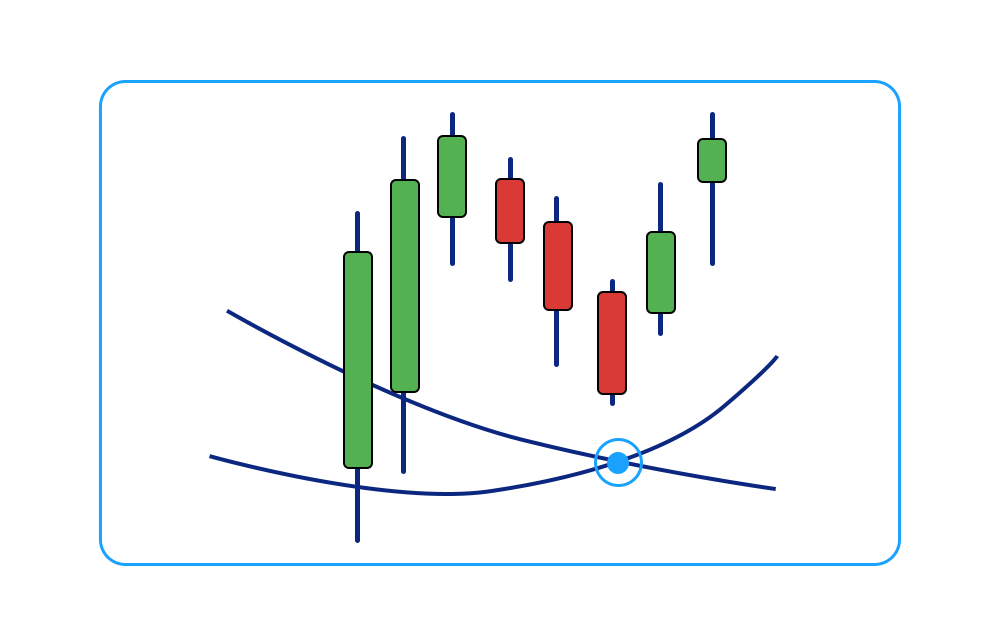

Learn insights through informative videos, webinars, articles, and guides with our comprehensive Trading Academy.
Discover what’s trending in and outside of Plus500.
This information is written by Plus500 Ltd. The information is provided for general purposes only, and does not take into account any personal circumstances or objectives. Before acting on this material, you should consider whether it is suitable for your particular circumstances and, if necessary, seek professional advice. No representation or warranty is given as to the accuracy or completeness of this information. It does not constitute financial, investment or other advice on which you can rely. Any references to past performance, historical returns, future projections, and statistical forecasts are no guarantee of future returns or future performance. Plus500 will not be held responsible for any use that may be made of this information and for any consequences that may result from such use. Hence, any person acting based on this information does so at their own discretion. The information has not been prepared in accordance with legal requirements designed to promote the independence of investment research.
Cryptocurrency CFDs are not available to Retail Clients.