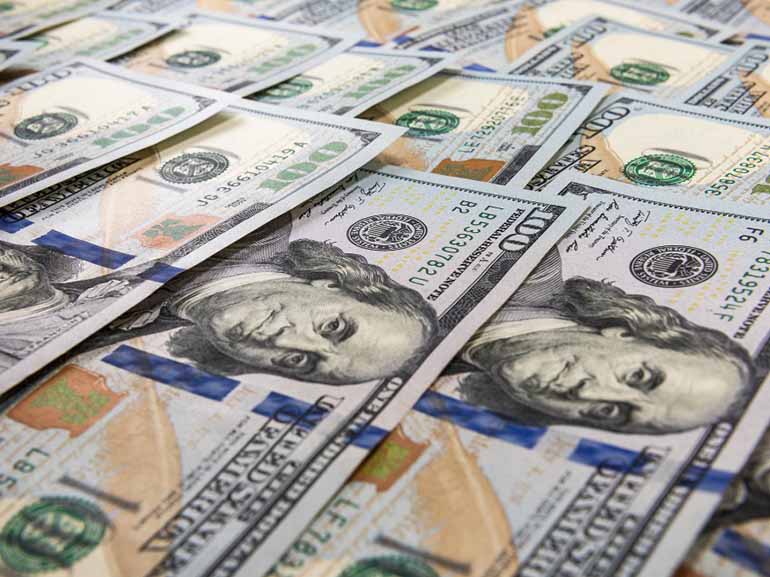
Status di Bene Rifugio del Dollaro USA nel 2026: Spiegazione per i Trader della Dedollarizzazione
giovedì 02 luglio 2026
Wall Street had the worst performance so far this year on Tuesday, February 21st, with all three major indices closing more than 2% lower. The worst hit was the tech-heavy Nasdaq (US-TECH 100), which closed down 2.5% to 11492.30. Interestingly, the Dow Jones (USA 30) erased all gains it captured during the year 2023. US Treasury yields rose, with the 10-year benchmark rising almost to 4.0%, reaching the highest rate since early November of last year. The rise in yields contributed to a spike in the "fear index", with the Volatility Index (VIX) trading sharply higher.

Both the Dow Jones and the S&P 500 (USA 500) registered the worst session since December 15th of last year. All sectors were impacted, but consumer discretionary saw the worst performance, dragging on the indices by dropping 3.3%. In addition, some of the biggest names in the stock market, particularly in the tech sector, were hit by the general decline. Accordingly, Tesla (TSLA), Amazon (AMZN), and Alphabet (GOOG) fell by 5.2%, 2.6%, and 2.6%, respectively.
Two major factors might have influenced the markets. First, the most recent release of a couple of retail firms' earnings raised concerns about the state of US consumers, and second, a potential move higher in interest rates. Investors were seen interpreting the rebound in February’s business activity to mean that interest rates would likely stay higher for longer in an effort to control inflation.
The S&P Global reported that the Purchasing Manufacturer's index (PMI), a gauge of business activity, showed that the US manufacturing sector returned to expansion for the first time in eight months. Many believe that the improvement in the PMI data was supported by a robust services sector. Moreover, the data may have also indicated that the economy was withstanding the effects of the Fed's rate hikes, which added to the "higher for longer" narrative. (Source:Yahoo Finance)
On Tuesday, two major US retailers, Walmart (WMT) and Home Depot (HD) provided an ominous tone for the markets. They delivered weaker guidance and warned that consumers could be less active this year. Walmart, in particular, is seen as a bellwether for the economy, given its size, and this time it guided below market expectations. Both companies pointed to uncertainty in consumer spending in the context of tighter economic conditions. Moreover, Walmart's CEO went as far as to warn that the US could enter a recession.
At the same time, US existing home sales dropped to the lowest level in over 12 years, according to data from the National Association of Realtors. However, the pace of the price decline moderated a bit, providing some hope that the bottom might be near. Furthermore, house prices also rose at the slowest pace since 2012. It appears that the latest retail sales and labour market data led to a restart in the upward trajectory of mortgage rates, aided by the expectation that the Fed will keep hiking through the summer.
Some analysts believe that the market is being buffeted by the reality of higher interest rates going forward and that this reality led to the rise in bond yields and, subsequently, stocks reacted. Therefore, attention is turning to the release of FOMC minutes later today, February 22nd.
Other analysts say that the market downturn was not due to a single event and that it's the culmination of the effects of the recent existing home sales and PMI data and the Fed's messaging that are driving the drop. The recent string of better-than-expected data has led to higher Treasury yields, making analysts believe the stock market is finally catching up. (Source:CNBC)
The most surprising amongst analysts' expectations is Mike Wilson’s of Morgan Stanley. Wilson believes the market could drop as much as 26% in the first half of the year as equity risk premium enters a "death zone". It seems that Morgan Stanley is one of the most pessimistic among major banks as it recently took a Fed pivot off the table, hence contrasting the consensus that the markets might continue to rally.
US indices fell yesterday as investors feared that interest rates would remain higher for longer than expected as the Fed attempts to tame inflation. The drop came in the wake of flash PMI figures returning to expansion, the latest in several indicators pointing to the economy remaining resilient, which contributed to market participants revising upwards where Fed funds rates are expected to peak. Nonetheless, others may disagree with this interpretation.




Approfondisci le tue conoscenze attraverso video, articoli e guide informative con la nostra esauriente Trading Academy.
Scopri ciò che fa tendenza all'interno e all'esterno di Plus500.
Queste informazioni sono state scritte da Plus500 Ltd. Le informazioni sono fornite solo per scopi generali e non tengono conto di circostanze o obiettivi personali. Prima di agire sulla base di queste informazioni, dovresti valutare se sono adatte alla tua situazione specifica e, se necessario, chiedere un parere professionale. Non viene fornita alcuna dichiarazione o garanzia in merito all'accuratezza o alla completezza di queste informazioni. Non costituisce una consulenza finanziaria, di investimento o di altro tipo su cui fare affidamento. Qualsiasi riferimento ai risultati passati, ai rendimenti storici, alle proiezioni future e alle previsioni statistiche non è garanzia di rendimenti o performance futuri. Plus500 non sarà ritenuta responsabile per qualsiasi uso che possa essere fatto di queste informazioni e per le conseguenze che potrebbero derivare da tale uso. Pertanto, chiunque agisca sulla base di queste informazioni lo fa a propria discrezione. Le informazioni non sono state preparate in base ai requisiti legali che mirano a promuovere l'indipendenza della ricerca in materia di investimenti.
I CFD su criptovalute non sono disponibili ai clienti al dettaglio.