Apple Launches New iPhone as NVIDIA, Intel & US-China AI Developments Take Focus
Thursday 10 September 2026
Kevin Warsh was sworn in as the 17th Federal Reserve Chair at the White House on Friday, 22 May 2026, the first Fed chair sworn in at the White House since Alan Greenspan in 1987. His first FOMC decision lands on 16-17 June. Three weeks before that, this week's April core PCE on Thursday and the second estimate of Q1 GDP give traders the first major data tests of his chairmanship.
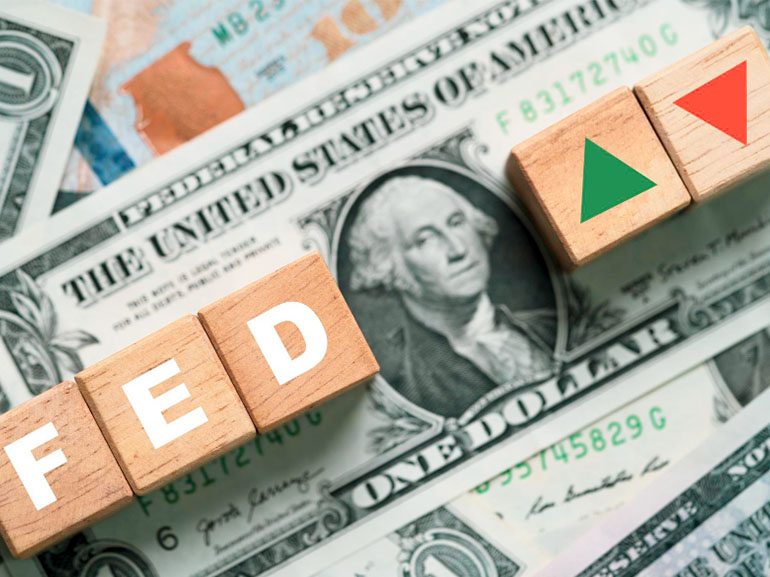
Warsh sworn in as Fed Chair on 22 May 2026, with his first FOMC on 16-17 June.
S&P 500 closed Friday at 7,473.47, an eighth consecutive weekly gain and the longest streak since 2023.
April core CPI printed at 2.8% YoY, slightly above the consensus estimate of 2.7%. April PCE follows Thursday at 12:30 London.
April FOMC voted 8-4, the most dissents since 1992. The 20 May minutes detailed the split.
Waller pivoted hawkish on 22 May, futures now pricing in a growing probability of at least one 25 basis point hike by end-2026 (Source: The Street)
Warsh took the oath from Supreme Court Justice Clarence Thomas after a 54-45 Senate vote on 13 May, the narrowest Fed chair confirmation on record. He has indicated a preference for tighter inflation discipline and streamlined Fed communications. Powell remains on the Board of Governors.
The April FOMC held the federal funds target at 3.50-3.75% with four dissents, the most since 1992. Stephen Miran preferred a quarter-point cut, while Beth Hammack, Neel Kashkari and Lorie Logan opposed retaining the easing bias language. The 20 May minutes noted "many participants" wanted that bias removed. Waller's pivot reshapes the June math On the same Friday as Warsh's swearing-in, Fed Governor Christopher Waller delivered a hawkish speech in Frankfurt. Waller, who spent early 2026 advocating cuts, said the next FOMC move is as likely to be a hike as a cut and called for removing the easing bias from the policy statement. He stopped short of advocating a hike now, but said he would not rule one out if inflation does not slow soon, adding that "inflation is not headed in the right direction". As a permanent Board voter, Waller's shift narrows the FOMC's dovish bench and reshapes the arithmetic going into the 16-17 June meeting.
April core CPI printed at 2.8% YoY, accelerating from 2.6% in March. March core PCE was 3.2% YoY, with the headline at 3.5%. Q1 GDP advance was +2.0% annualised, rebounding from Q4 2025's +0.5%; the second estimate could be revised either way.
A hotter PCE could put further upward pressure on the two-year Treasury yield, already above 4.1%, support the dollar, and weigh on duration-sensitive growth shares. A softer print could ease real yields. A hot print likely weighs more on the Nasdaq Composite than the Dow Jones Industrial Average given growth's duration sensitivity. Gold hovered above $4,500 per ounce on Friday, roughly 13% below its conflict-driven peak. EUR/USD traded around 1.160 on Friday and 1.163 on Monday, with PCE on Thursday and Eurozone country CPI flashes on Friday acting as two-way catalysts.
US-Iran peace talks progressed over the weekend, but no deal was signed as of Sunday 24 May. A senior US official told CNN it could take "a few more days to finalize". On Monday, Iran said any agreement was not "imminent" while Secretary of State Marco Rubio said it could be finalised "today". Brent crude settled Friday at $103.54 per barrel before falling toward $96 per barrel on Monday on deal optimism. Oil remains roughly 50% above pre-conflict levels. For context, see US Inflation Week Meets Trump's Iran Ultimatum.
Monday 25 May - US markets closed for Memorial Day; four-session week.
Tuesday 26 May - Conference Board Consumer Confidence Index for May (15:00 London); FHFA House Price Index and S&P Case-Shiller home price data, covering Q1 2026 (14:00 London).
Wednesday 27 May - New Residential Sales for April (15:00 London); lighter data day.
Thursday 28 May - April PCE, advance durable goods orders, Q1 GDP second estimate, and weekly jobless claims; all at 13:30 London.
Friday 29 May - Chicago PMI (14:45 London); May flash CPI prints from Germany, France and Spain
First-tier data combines with the Fed leadership transition this week. April PCE and the Q1 GDP revision will set the inflation tone heading into Warsh's debut at the 16-17 June FOMC, against a backdrop reshaped by Waller's 22 May pivot. Iran headlines and the Strait of Hormuz remain the swing factors capable of overriding the macro calendar. Speeches from Warsh, Waller, and other FOMC voters could compete with data releases for market attention.
*Past performance does not guarantee future results. The above is for marketing and general informational purposes only, and are only projections and should not be taken as investment research, investment advice or a personal recommendation.
The core Personal Consumption Expenditures price index excludes food and energy and is the Federal Reserve's preferred inflation gauge in its 2% framework.
Thursday 28 May 2026 at 08:30 ET (12:30 London), alongside the Q1 GDP second estimate.
Warsh's first FOMC is 16-17 June. His tone may differ from Powell's, possibly shifting how traders read forward guidance.
An 8-4 vote split. One member preferred a cut. Three opposed retaining the easing bias language.
Talks continued via Pakistani mediators with no deal signed as of Sunday 24 May. The US naval blockade remained in place.
US markets were closed Monday 25 May for Memorial Day. Trading resumes Tuesday.





Learn insights through informative videos, webinars, articles, and guides with our comprehensive Trading Academy.
Discover what’s trending in and outside of Plus500.
This information is written by Plus500 Ltd. The information is provided for general purposes only, and does not take into account any personal circumstances or objectives. Before acting on this material, you should consider whether it is suitable for your particular circumstances and, if necessary, seek professional advice. No representation or warranty is given as to the accuracy or completeness of this information. It does not constitute financial, investment or other advice on which you can rely. Any references to past performance, historical returns, future projections, and statistical forecasts are no guarantee of future returns or future performance. Plus500 will not be held responsible for any use that may be made of this information and for any consequences that may result from such use. Hence, any person acting based on this information does so at their own discretion. The information has not been prepared in accordance with legal requirements designed to promote the independence of investment research.
Cryptocurrency CFDs are not available to Retail Clients.